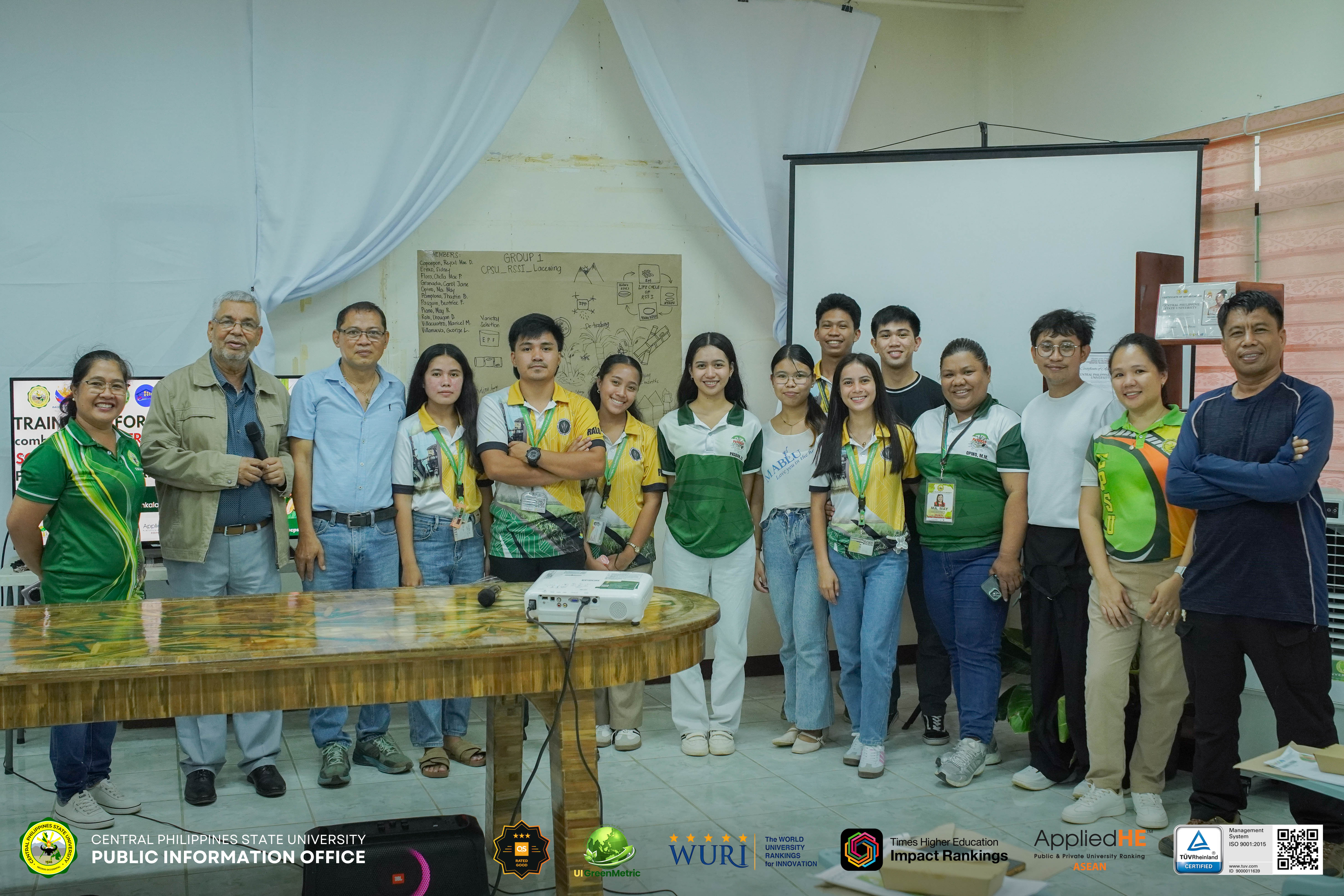
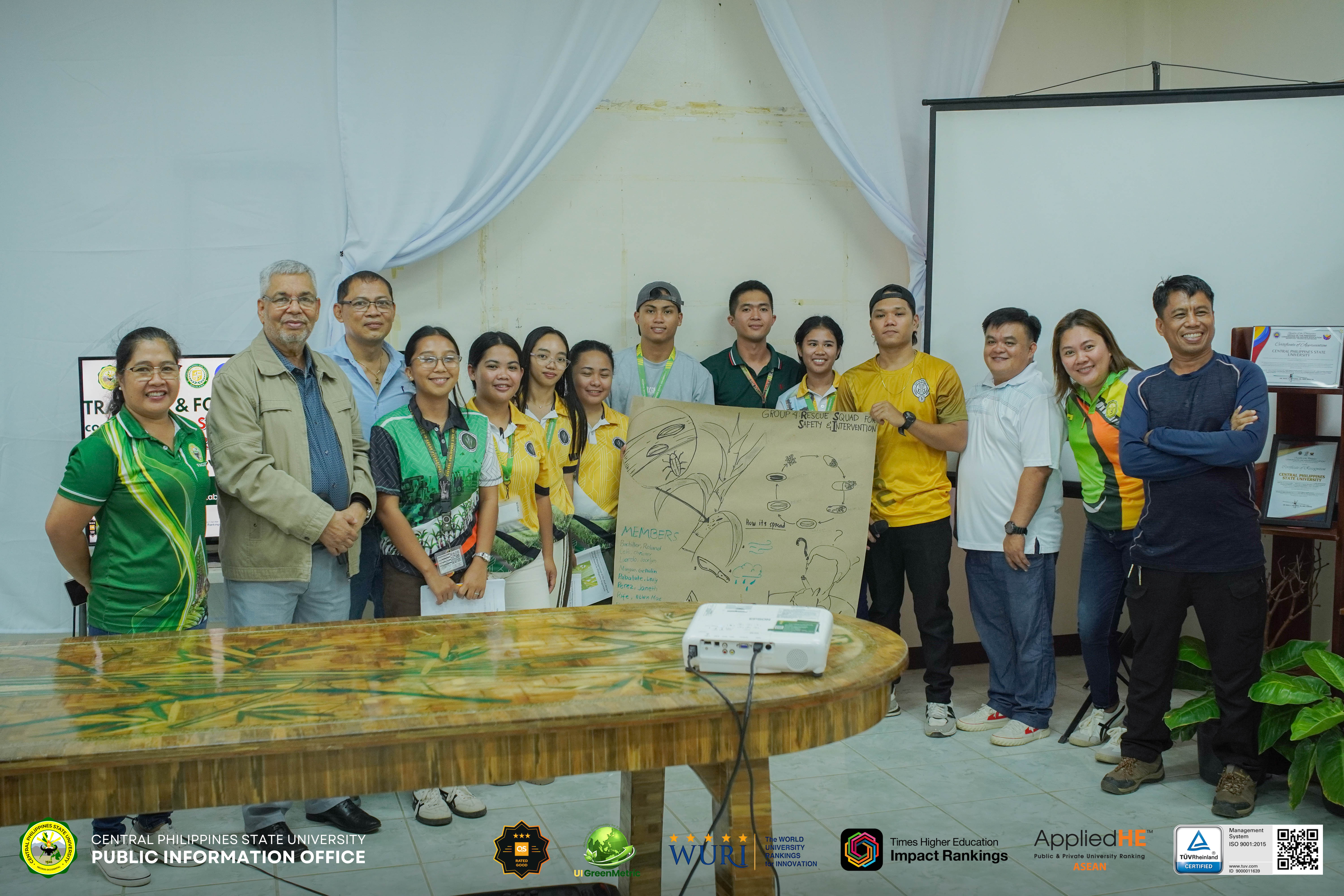
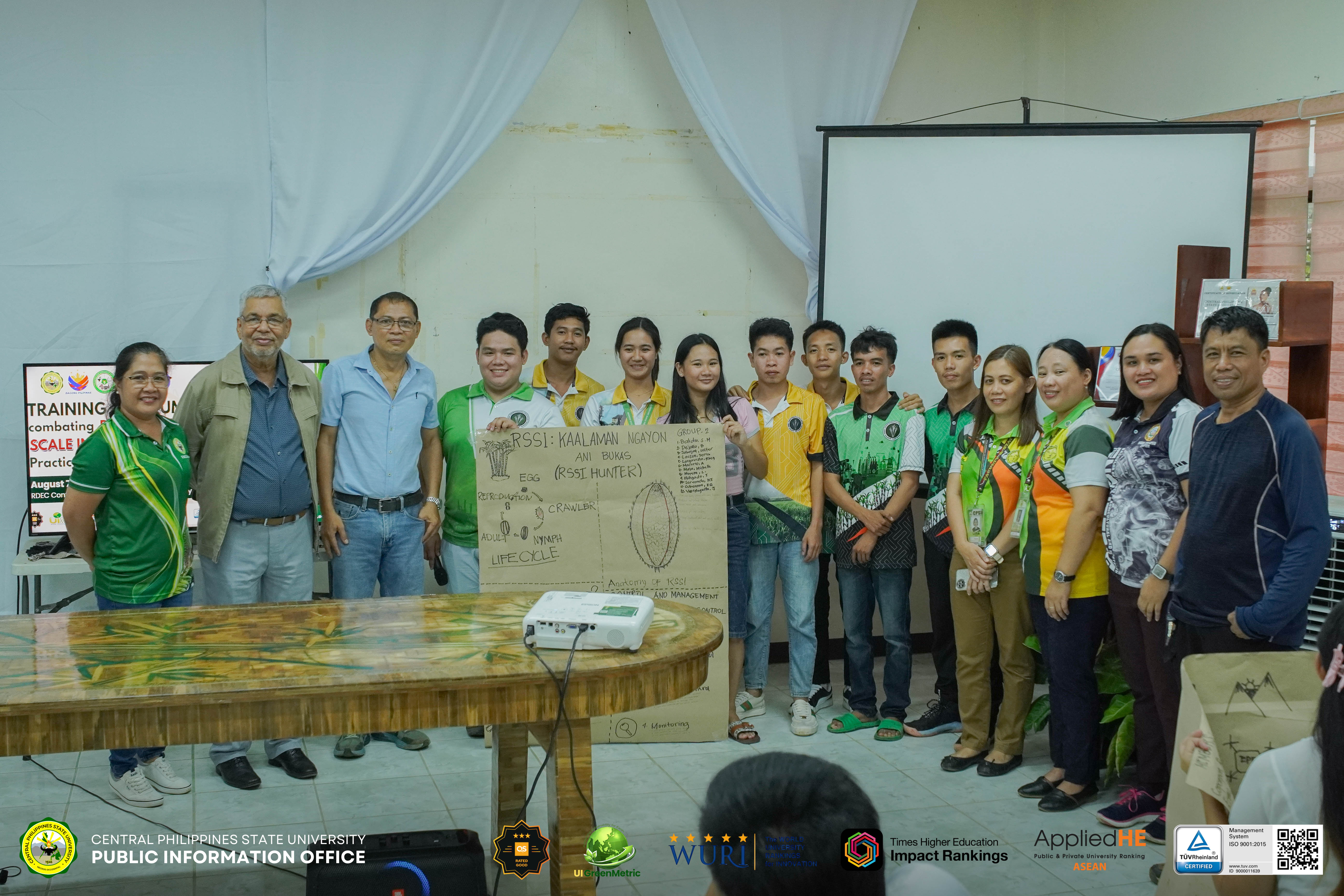
𝗧𝗿𝗮𝗶𝗻𝗶𝗻𝗴 𝗳𝗼𝗿𝘂𝗺 𝗼𝗻 𝗶𝗻𝘁𝗲𝗴𝗿𝗮𝘁𝗲𝗱 𝗺𝗮𝗻𝗮𝗴𝗲𝗺𝗲𝗻𝘁 𝗼𝗳 𝗥𝗦𝗦𝗜 𝗰𝗼𝗻𝗱𝘂𝗰𝘁𝗲𝗱 𝗯𝘆 𝘃𝗶𝘀𝗶𝘁𝗶𝗻𝗴 𝗽𝗿𝗼𝗳𝗲𝘀𝘀𝗼𝗿, 𝗘𝗻𝘁𝗼𝗺𝗼𝗹𝗼𝗴𝗶𝘀𝘁 𝗗𝗿. 𝗝𝗼𝘀𝗵𝗶, 𝗮𝘁 𝗖𝗣𝗦𝗨
Aug 12, 2026 | News
“Together, a low-cost, nature-based defense against RSSI is within reach for every Philippine sugarcane farm.”
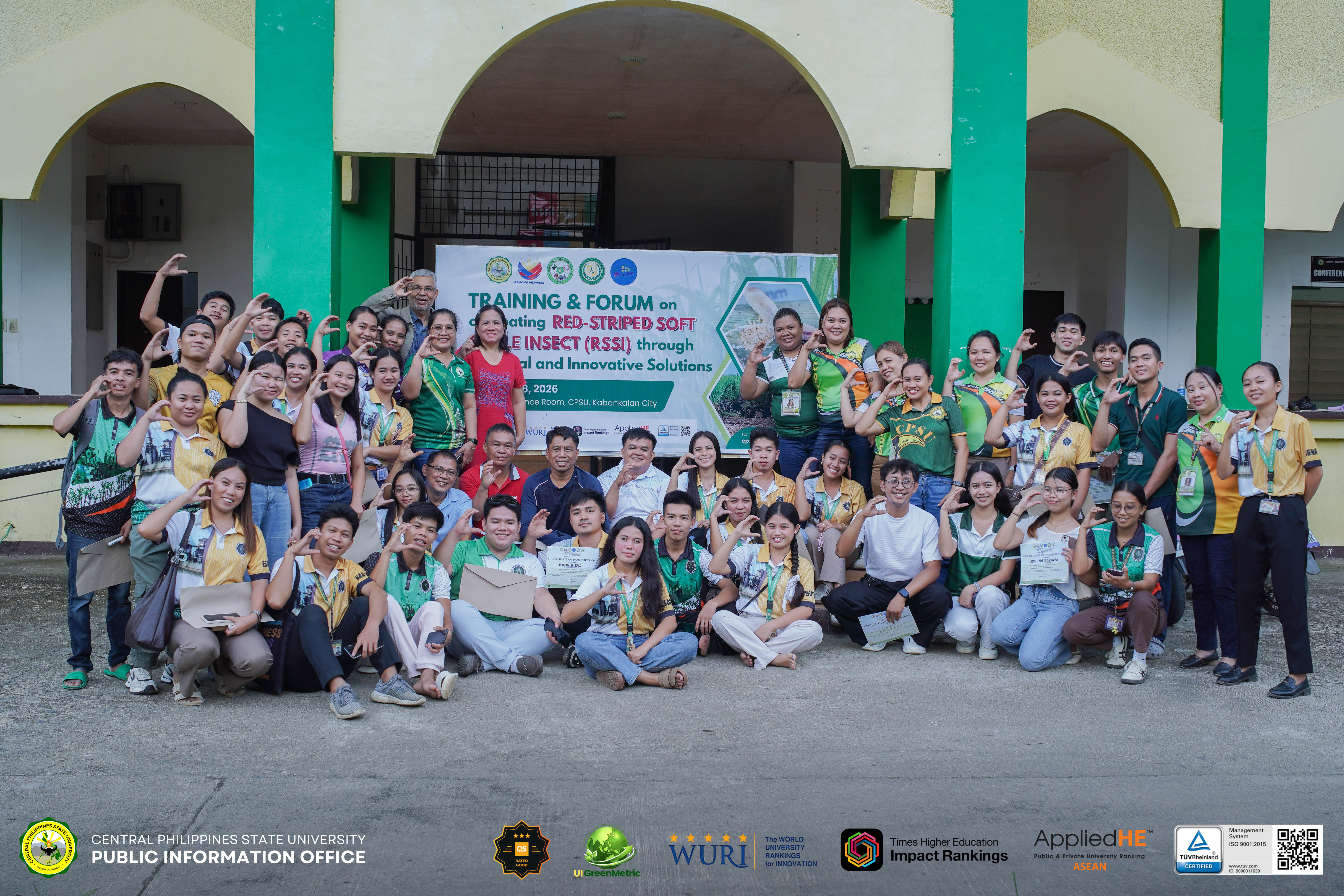
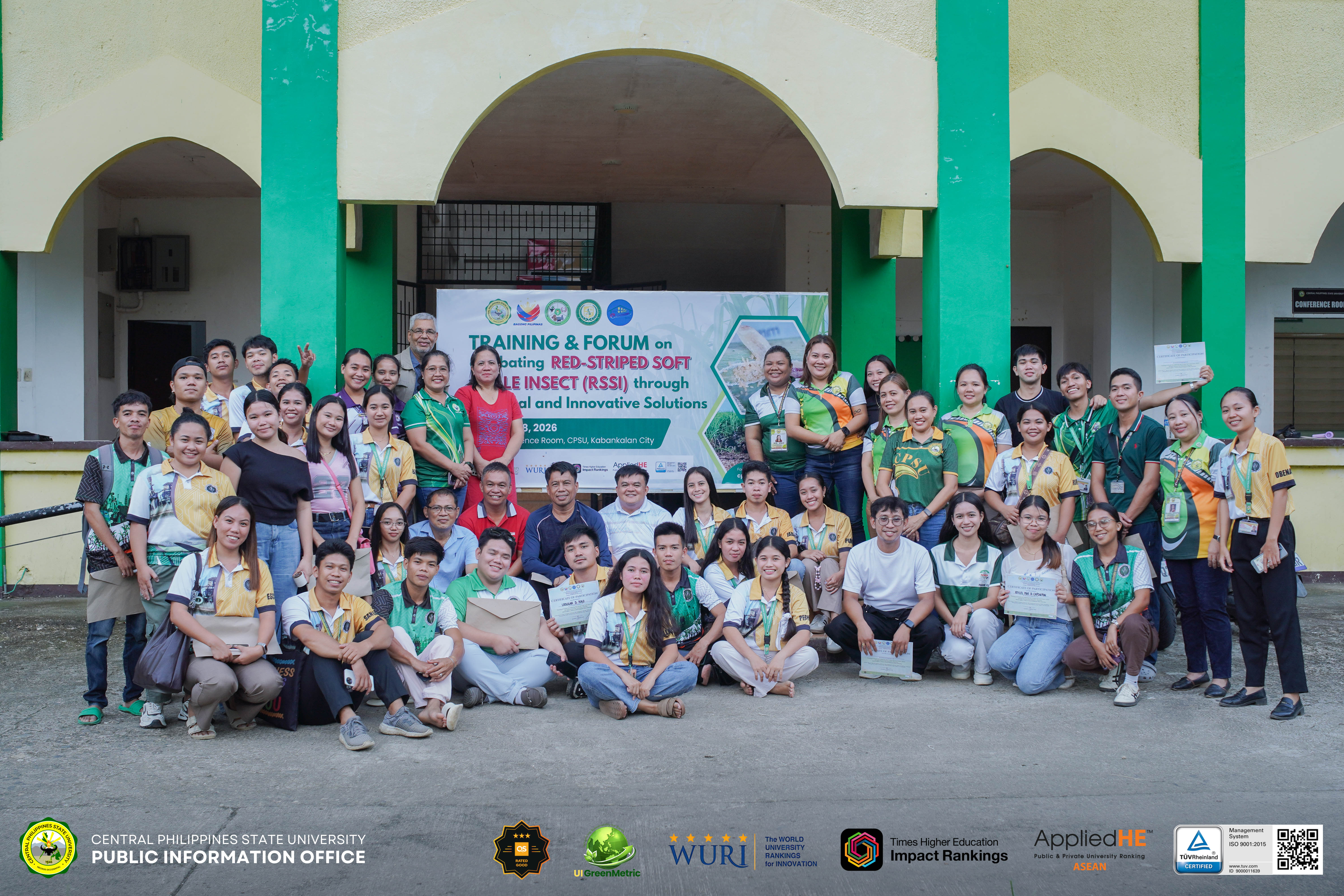
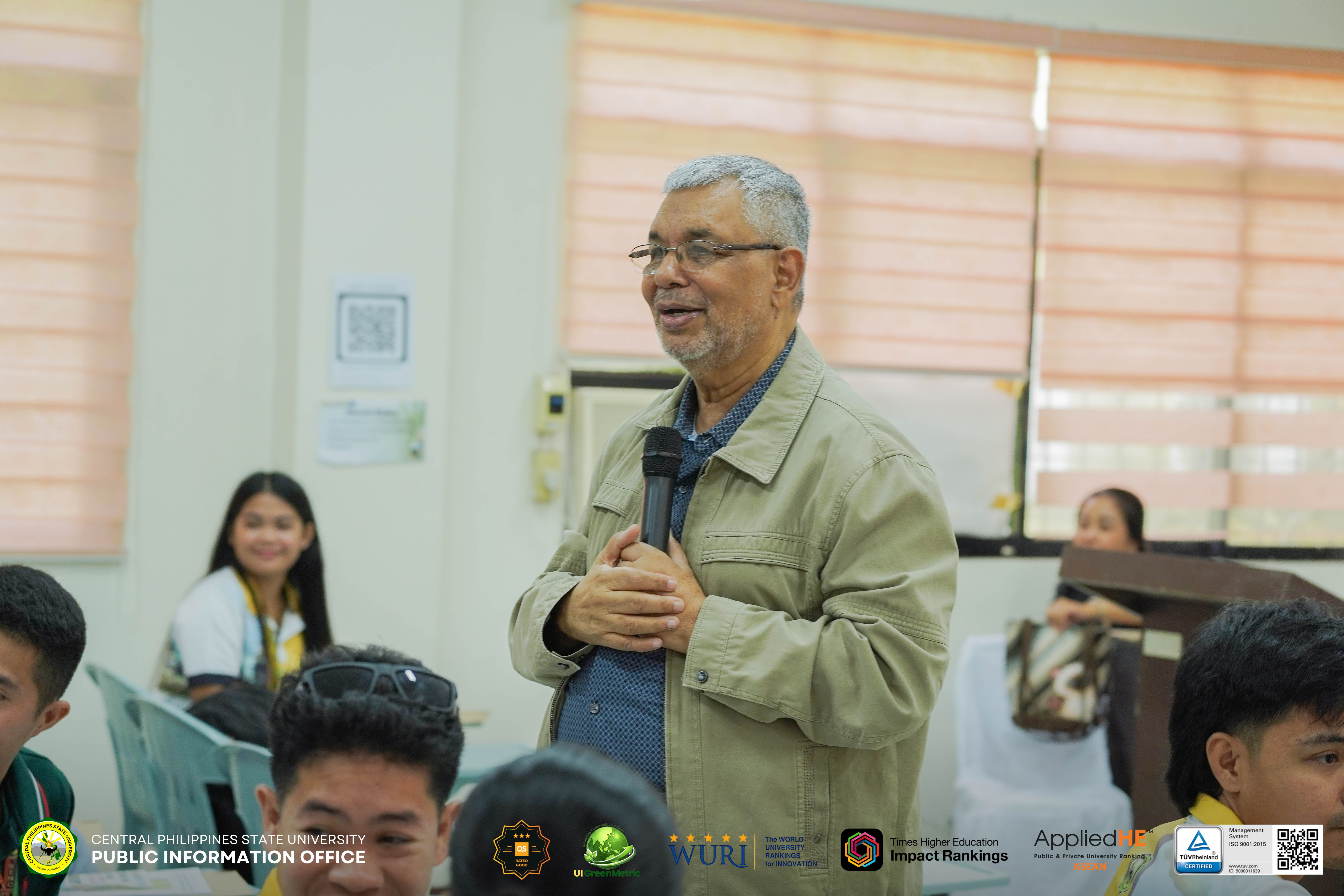
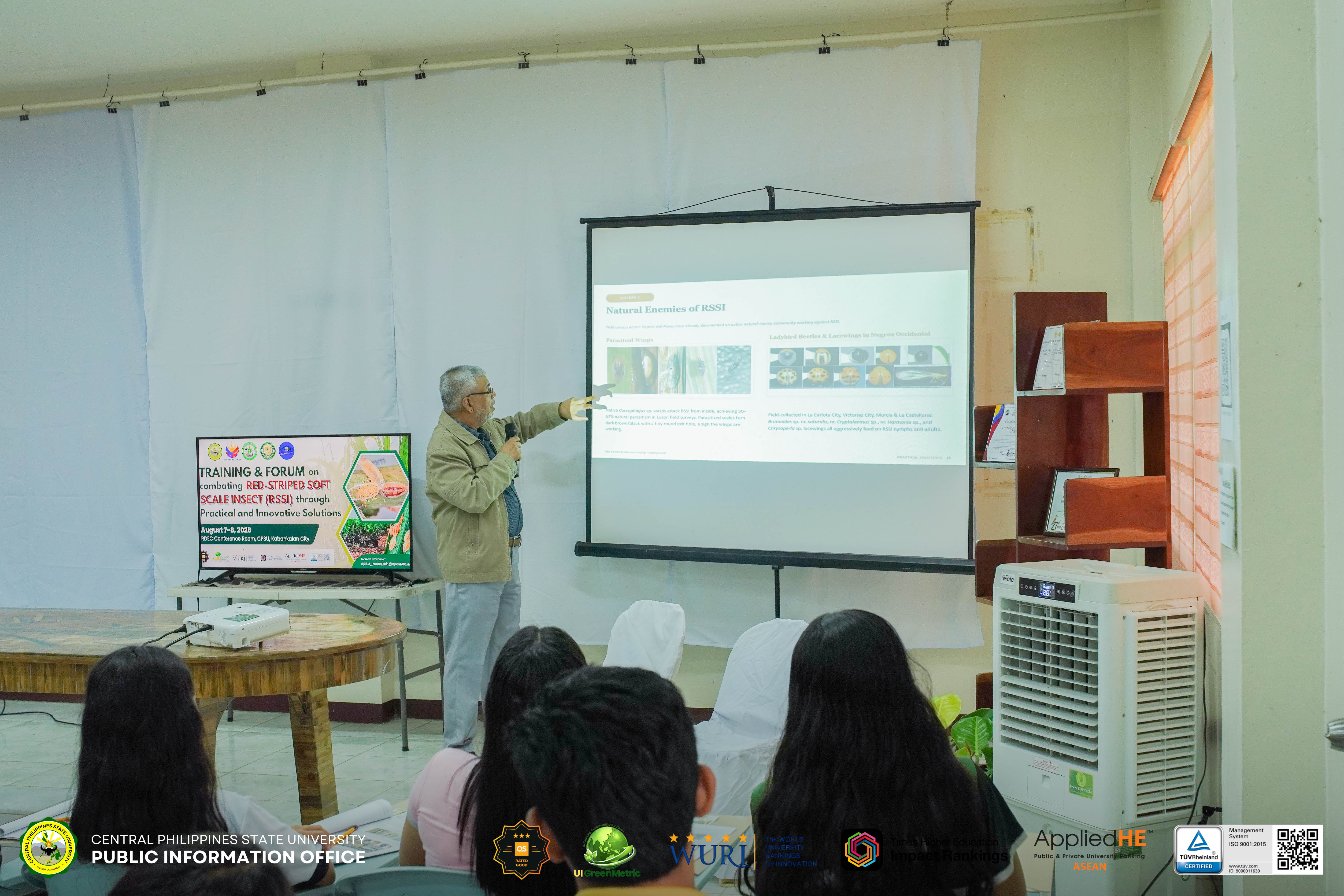
The Integrated Management of the Red-Striped Soft Scale Insect (RSSI) in Philippine Sugarcane training and forum was conducted by Central Philippines State University’s (CPSU) visiting professor and entomologist, Dr. Ravindra C. Joshi, and featured innovative, nature-based solutions.
Held from August 7 to 8, 2026, the training and forum were facilitated for College of Agriculture and Forestry (CAF) students and faculty and for Graduate School students and sugarcane farmers, as the respective audiences.
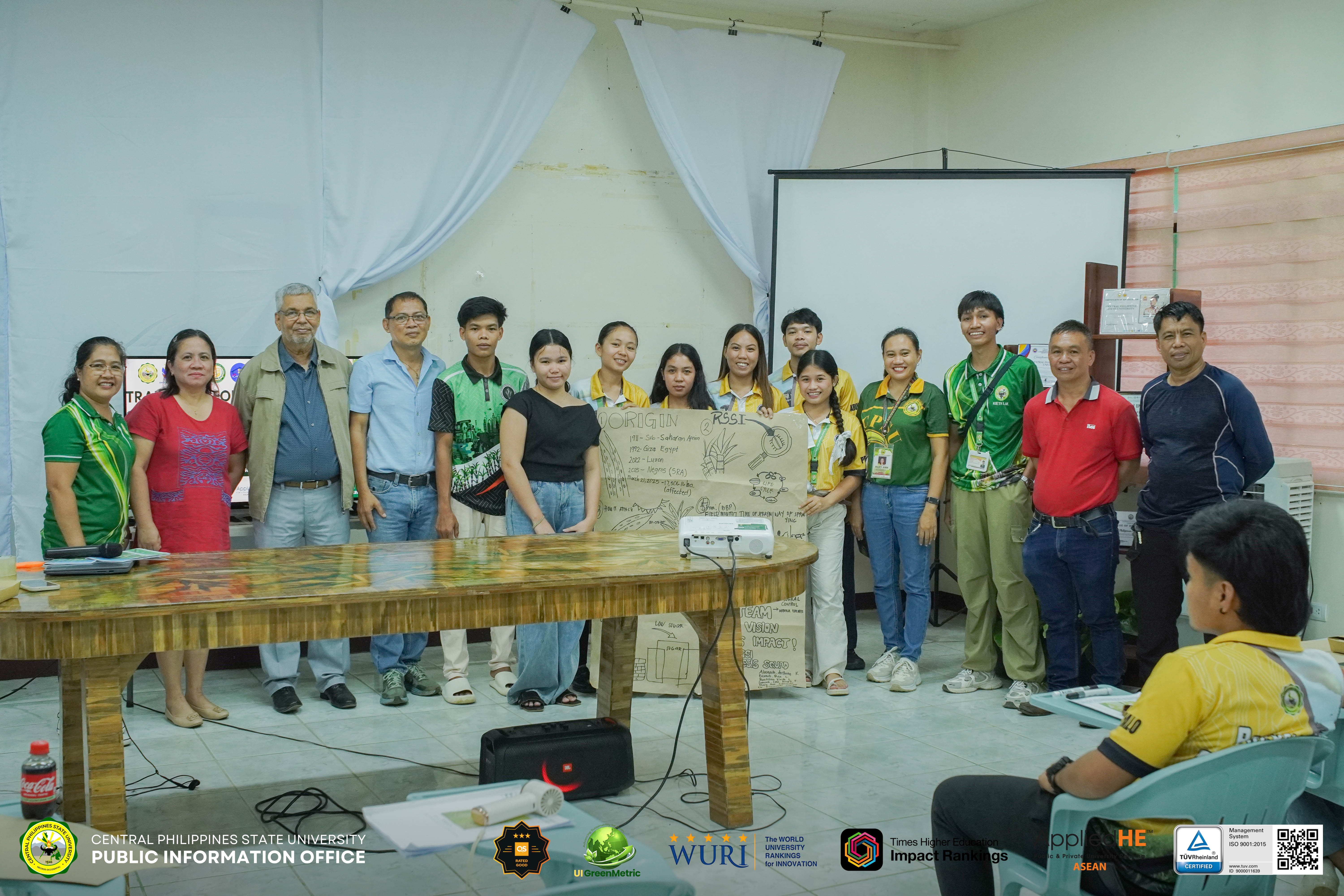
The training had five major sessions that discussed essential facts about the nature of RSSI, or the Pulvinaria tenuivalvata, including its high egg output, life cycle length, life stages, the historical background of its spread, and the effects of RSSI’s presence in crops.
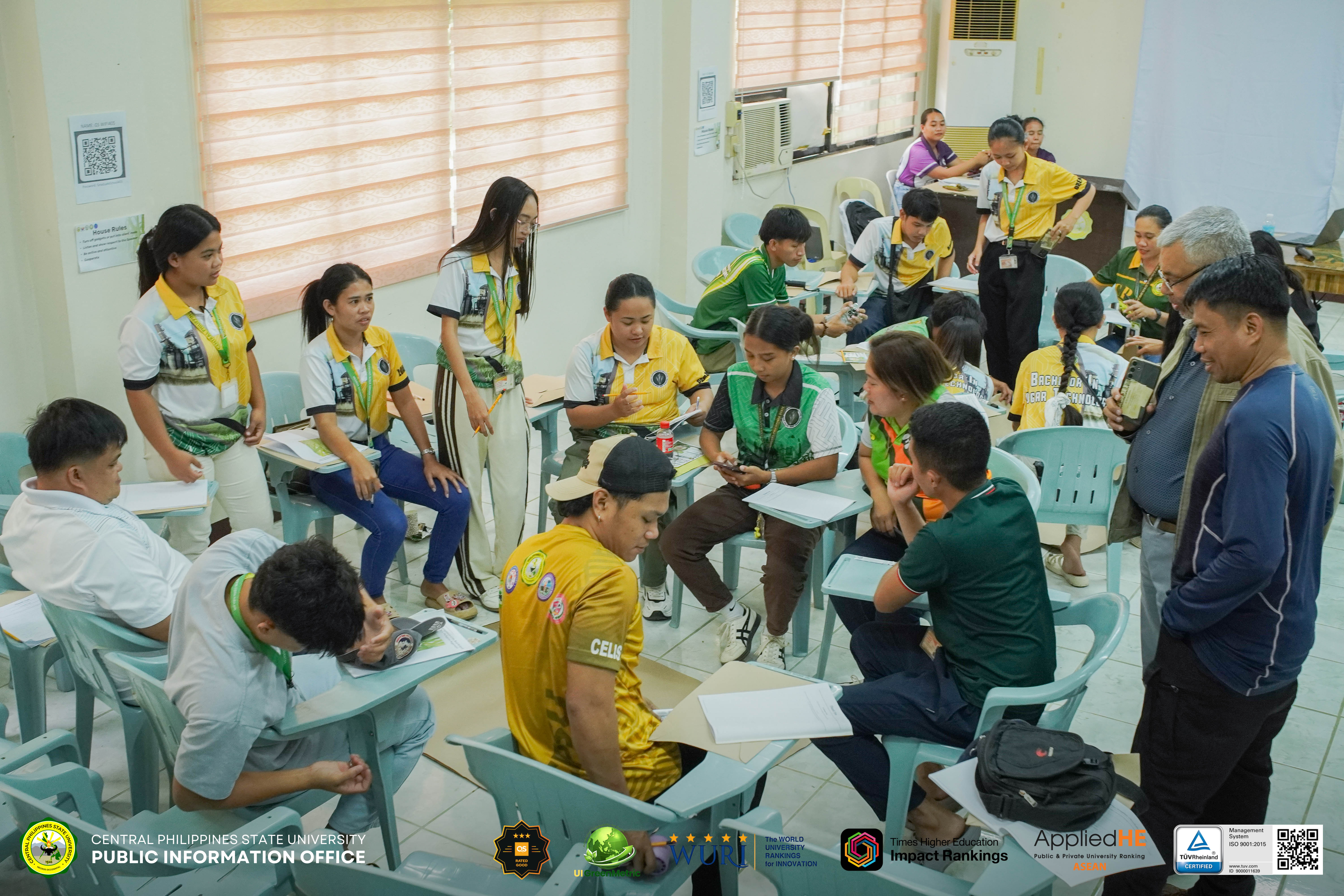
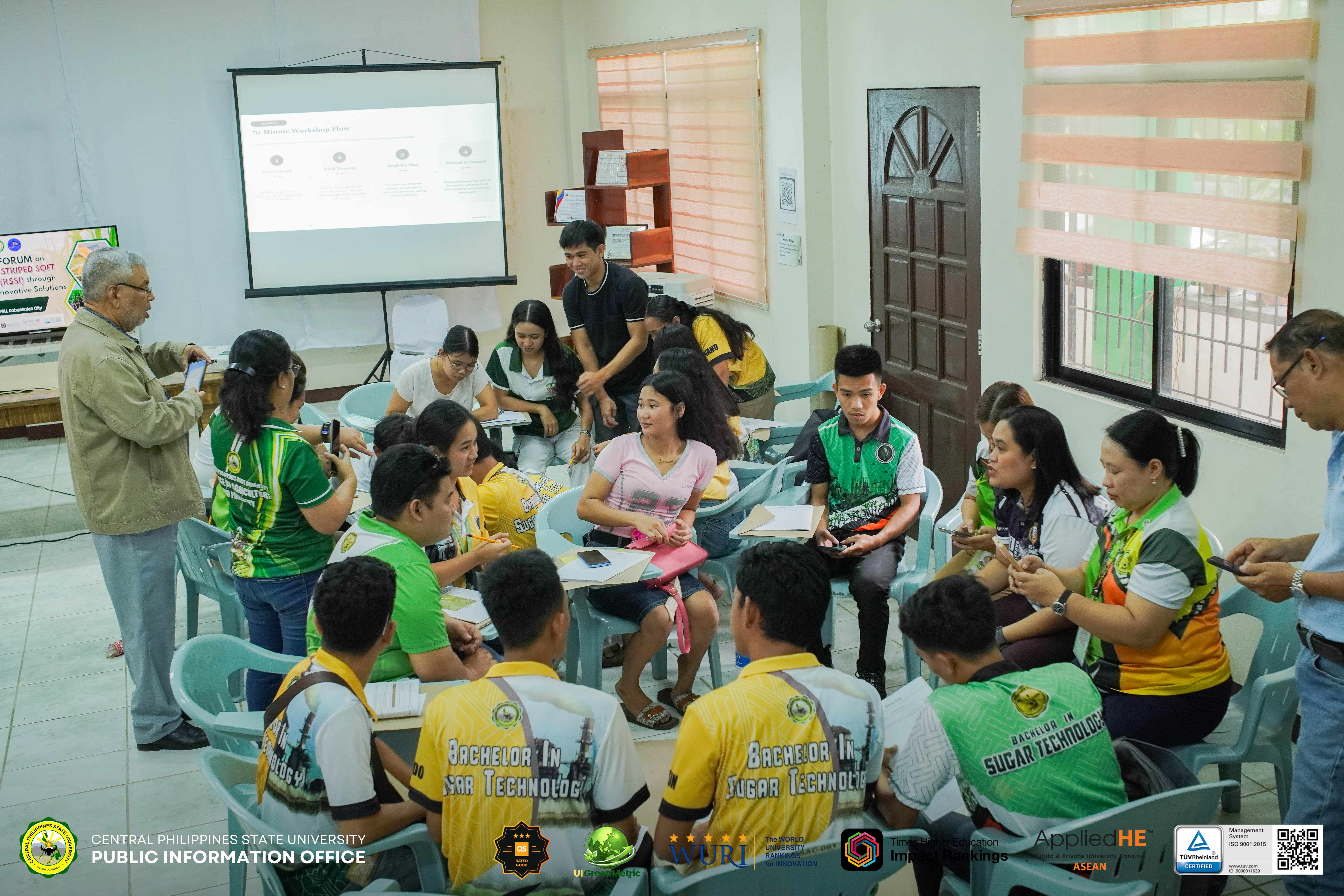
In the workshop session, participants were guided in developing local strategies and action plans, which they crafted according to their area or mill district group to develop their feasible and practical thirty-day biosecurity strategy, which involved sketching their local production zone and marking high-risk areas: fields near roads, waterlogged blocks, and uncleaned cogon borders.
The discussions included relevant questions like (1) How can small farmers lower the labor cost of leaf stripping and burning? (2) What support is available if our sugar content drops due to scale damage? (3) How do we get neighboring farms to strip leaves and burn trash on the same days? (4) What’s the simplest way to get smallholders reporting sightings by phone? (5) How can farmer associations obtain free training to produce mass-produced fungi using molasses broth? (6) Why is it critical to protect the zero-chemical window?
They also tackled how these widespread infestations happen, the factors (including weather), the reproduction rate of RSSI, and the current reports on its infestation in the country’s sugarcane fields.
Doctor Joshi shared practical solutions and best management practices in addressing the widespread infestation, including an RSSI management calendar, which entails growth phases, correct timing in administering the interventions, the corresponding primary field action, and the purpose of the interventions.
In addition, the visiting professor also highlighted the utilization of nature-based approaches like allowing the natural enemies or predators of RSSI, including parasitoid wasps, ladybird beetles, and lacewings, to aid in the natural control of the pest’s population and also taught about managing other insect populations that indirectly influence the reproduction of RSSI.
Doctor Joshi introduced innovative technologies and research-based approaches, including the integration of fungal spores to kill both nymphs and adults and the use of the Sugar Regulatory Administration (SRA)-recommended Open Data Kit mobile app—encouraging active farmer involvement in updating real-time pest sightings with GPS coordinates and building a live hotspot map.
The training forum was collaboratively organized by CPSU’s Research and Development Services Office and the Graduate School, headed by Director Angelie Rose L. Lumba, PhD, and Dean Prof. Riza Stephania A. Alfaras, PhD, in response to the increasingly arising need for the academe to contribute to the interventions for the agricultural crisis, especially that which the sugar industry in the Negros Island Region is facing.